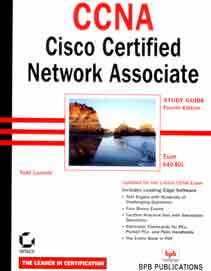
The following topics are general guidelines for the content likely to be included on the CCNA exam. However, other related topics may also appear on any specific delivery of the exam.
Describe how a network works
~
~
~
~
~
~
~
~
~
~
~
~
~
Describe the purpose and functions of various network devices
Select the components required to meet a network specification
Use the OSI and TCP/IP models and their associated protocols to explain how data flows in a network
Describe common networked applications including web applications
Describe the purpose and basic operation of the protocols in the OSI and TCP models
Describe the impact of applications (Voice Over IP and Video Over IP) on a network
Interpret network diagrams
Determine the path between two hosts across a network
Describe the components required for network and Internet communications
Identify and correct common network problems at layers 1, 2, 3 and 7 using a layered model approach
Differentiate between LAN/WAN operation and features
Configure, verify and troubleshoot a switch with VLANs and interswitch communications
~
~
~
~
~
~
~
~
~
~
~
~
~
~
~
~ ~
~
~
~
~
~
Select the appropriate media, cables, ports, and connectors to connect switches to other network devices and hosts
Explain the technology and media access control method for Ethernet networks
Explain network segmentation and basic traffic management concepts
Explain basic switching concepts and the operation of Cisco switches
Perform and verify initial switch configuration tasks including remote access management
Verify network status and switch operation using basic utilities (including: ping, traceroute, telnet, SSH, arp, ipconfig), SHOW & DEBUG commands
Identify, prescribe, and resolve common switched network media issues, configuration issues, auto negotiation, and switch hardware failures
Describe enhanced switching technologies (including: VTP, RSTP, VLAN, PVSTP, 802.1q)
Describe how VLANs create logically separate networks and the need for routing between them
Configure, verify, and troubleshoot VLANs
Configure, verify, and troubleshoot trunking on Cisco switches
Configure, verify, and troubleshoot interVLAN routing
Configure, verify, and troubleshoot VTP
Configure, verify, and troubleshoot RSTP operation
Interpret the output of various show and debug commands to verify the operational status of a Cisco switched network.
Implement basic switch security (including: port security, trunk access, management vlan other than vlan1, etc.)
Implement an IP addressing scheme and IP Services to meet network requirements in a medium-size Enterprise branch office network.
~
~
~
~
~
~
~
~
~
~ ~
~
~
~
Describe the operation and benefits of using private and public IP addressing
Explain the operation and benefits of using DHCP and DNS
Configure, verify and troubleshoot DHCP and DNS operation on a router.(including: CLI/SDM)
Implement static and dynamic addressing services for hosts in a LAN environment
Calculate and apply an addressing scheme including VLSM IP addressing design to a network
Determine the appropriate classless addressing scheme using VLSM and summarization to satisfy addressing requirements in a LAN/WAN environment
Describe the technological requirements for running IPv6 in conjunction with IPv4 (including: protocols, dual stack, tunneling, etc).
Describe IPv6 addresses
Identify and correct common problems associated with IP addressing and host configurations
Configure, verify, and troubleshoot basic router operation and routing on Cisco devices
~
~
~
~
~
~
~
~
~
~
~
~
~
~
~
~
~ ~
~
~
Describe basic routing concepts (including: packet forwarding, router lookup process)
Describe the operation of Cisco routers (including: router bootup process, POST, router components)
Select the appropriate media, cables, ports, and connectors to connect routers to other network devices and hosts
Configure, verify, and troubleshoot RIPv2
Access and utilize the router to set basic parameters.(including: CLI/SDM)
Connect, configure, and verify operation status of a device interface
Verify device configuration and network connectivity using ping, traceroute, telnet, SSH or other utilities
Perform and verify routing configuration tasks for a static or default route given specific routing requirements
Manage IOS configuration files. (including: save, edit, upgrade, restore)
Manage Cisco IOS.
Compare and contrast methods of routing and routing protocols
Configure, verify, and troubleshoot OSPF
Configure, verify, and troubleshoot EIGRP
Verify network connectivity (including: using ping, traceroute, and telnet or SSH)
Troubleshoot routing issues
Verify router hardware and software operation using SHOW & DEBUG commands.
Implement basic router security
Explain and select the appropriate administrative tasks required for a WLAN
~
~
~
~
~
~
~ ~
~
~
Describe standards associated with wireless media (including: IEEE WI-FI Alliance, ITU/FCC)
Identify and describe the purpose of the components in a small wireless network. (Including: SSID, BSS, ESS)
Identify the basic parameters to configure on a wireless network to ensure that devices connect to the correct access point
Compare and contrast wireless security features and capabilities of WPA security (including: open, WEP, WPA-1/2)
Identify common issues with implementing wireless networks. (Including: Interface, missconfiguration)
Identify security threats to a network and describe general methods to mitigate those threats
~
~
~
~ ~ ~
~
Describe today's increasing network security threats and explain the need to implement a comprehensive security policy to mitigate the threats
Explain general methods to mitigate common security threats to network devices, hosts, and applications
Describe the functions of common security appliances and applications
Describe security recommended practices including initial steps to secure network devices
Implement, verify, and troubleshoot NAT and ACLs in a medium-size Enterprise branch office network.
~
~
~
~
~
~
~
~ ~
Describe the purpose and types of ACLs
Configure and apply ACLs based on network filtering requirements.(including: CLI/SDM)
Configure and apply an ACLs to limit telnet and SSH access to the router using (including: SDM/CLI)
Verify and monitor ACLs in a network environment
Troubleshoot ACL issues
Explain the basic operation of NAT
Configure NAT for given network requirements using (including: CLI/SDM)
Troubleshoot NAT issues
Implement and verify WAN links
~
~
~
~
~
~
Describe different methods for connecting to a WAN
Configure and verify a basic WAN serial connection
Configure and verify Frame Relay on Cisco routers
Troubleshoot WAN implementation issues
Describe VPN technology (including: importance, benefits, role, impact, components)
Configure and verify a PPP connection between Cisco routerss
Exam Spotlight
640 - 821 CCNA Two Part Harmony
Exam
# 640-821 Introduction to Cisco Technology (INTRO)
Reviewer's Rating
This new exam will test your knowledge of basic router configuration, cable type, IOS commands, the OSI model & subnetting
Test
55 to 65 question, 60 minute time limit
Information
Cost Irs 2,500/- (US $ 65) candidates for CCNA must take in conjuction with #640-811 ICND exam
This new exam will test your knowledge of basic router troubleshooting, VLANs, IOS, commands, the OSI model & subnetting
Test
55 to 65 question, 60 minute time limit
Information
Cost Irs 5,000/- (US $ 125) candidates for CCNA must take in conjuction with #640-821 INTRO exam
Who Should take this exam?
Current CCNA may use this exam to recertify.
Students can take Paper 811 & 821 or 801
640 - 802 NEW CCNA Exam
Exam
CCNA Exam (CCNA # 640-802)
Reviewer's Rating
will test your knowledge of extending switched networks with VLANS, determining IP routes, managing IP traffic with access lists
Test
55 to 65 question,(three simulation) 90 minutes time limit apx. score of 849 needed to pass
Information
Cost Irs 7,500/- (US $ 190)
Who Should take this exam?
Those who want to learn to earn their CCNA in one attempt (others can take the new two exam option)
CCNA Study Material
CCNP
Cisco Certified Network Associate (CCNA) certification is recommended for students to enroll in the Cisco Certified Network Professional (CCNP) curriculum. This advanced curriculum trains students to install, configure and operate local-and wide-area networks (LANs and WANs), and dial access services for organizations with networks from 100 to more than 500 nodes with protocols and technologies such as: TCP/IP, OSPF, EIGRP, BGP, ISDN, Frame Relay, STP, and VTP. The focus is on developing those skills that enable students to implement scalable networks, build campus networks using multilayer switching technologies, create and deploy a global intranet, and troubleshoot an environment using Cisco routers and switches for multiprotocol client hosts and services.
Upon completion of CCNP1, students will be able to perform advanced routing tasks including:
~
~
~
~
electing and configuring scalable IP addresses.
Implementing technologies to redistribute and support multiple, advanced, IP routing protocols such as OSPF, EIGRP, and BGP.
Configuring access lists.
Designing and testing edge router connectivity into a BGP network.
CCNP2 Remote Access Competencies:
Upon completion of CCNP2, students will be able to perform advanced remote access tasks including:
~
~
~
~
Configuring Asynchronous connections.
Point-to-Point Protocol (PPP) architecture, protocol, callback, and compression.
ISDN architecture, protocol layers, BRI and DDR.
Configuring X.25, Frame Relay, and AAA.
CCNP3 Multilayer Switching Competencies:
Upon completion of CCNP3, students will be able to perform multilayer switching tasks including
~
~
~
~
~
Fast Ethernet, Gigabit Ethernet.
VLAN basics, types, identification, and trunking protocol.
Spanning Tree Protocol.
MLS processes, and configuration.
Multicasting protocols, routing, and tasks.
CCNP4 Network Troubleshooting Competencies:
Upon completion of CCNP4, students will be able to perform network-troubleshooting tasks in areas such as:
~
~
OSI Layers 1, 2, and 3.
TCP/IP, LAN switching, VLANs, Frame Relay, ISDN, Appletalk, Novell, EIGRP, OSPF, BGP Industry-Recognized Certification
Cisco Certified Network Professional (CCNP) coursework prepares students for CCNP certification.
A CCNP certified individual can perform the following tasks:
~
~
~
~
~
Implement appropriate technologies to build a scalable routed network
Build campus networks using multilayer switching technologies
Improve traffic flow, reliability, redundancy, and performance for campus LANs, routed and switched WANs, and remote access networks
Create and deploy a global intranet
Troubleshoot an environment that uses Cisco routers and switches for multiprotocol client hosts and services
Positions for a CCNP certified individual include:
~
~
~
~
~
Network administrator
Level 2 support engineer
Level 2 systems engineer
Network technician
Deployment engineer
Advance Your Career CCNP Certification
Expand Your Professional Options Gaining and Certifying Advanced Skills
The CCNP certification validates an individual’s networking skills at the midcareer level. Candidates who pass the required proctored exams will receive a CCNP certificate from Cisco and may use the CCNP designation on their business cards.
CCNP forms the professional level of the Cisco Career Certification program.
Who is the course for?
Anyone with a good background in Computer Networks and the Internet and preferably CCNA qualified.
What will the course give you?
~
~
~
~
~
Preparation for the CISCO Certified Network Professional Exams
Advanced networking skills to design, install and maintain large routed computer networks.
Increased professional credibility by gaining high standards of technical expertise.
Skills necessary to improve your opportunities within the workforce.
The knowledge and skills necessary to take the CCNP exams
What material is covered ?
~
~
~
~
~
~
~
~
~
~
~
Extending IP Addresses Using VLSMs
Configuring OFPF, Enhanced IGRP and BGP
Assembling and Cabling WAN Components
Using ISDN and DDR to Enhance Remote Connectivity
Scaling IP Addresses with PAT and NAT
Introduction to Switching Concepts and Virtual LANs
Support Resources for Troubleshooting
Workgroup Discovery Lab and CCO
Documenting Symptoms, Actions and Results
Tracking Log-ins and Connections
Troubleshooting VLANs on Routers and Switches
Exam
Recommended Training
US $
642-901 BSCI
Building Scalable Cisco Internetworks (BSCI)
150
642-812 BCMSN
Building Cisco Multilayer Switched Networks (BCMSN)
150
642-825 ISCW
Implementing Secure Converged Wide Area Networks (ISCW)
150
642-845 ONT
Optimizing Converged Cisco Networks (ONT)
150
Required Exam(s)
Recommended Training
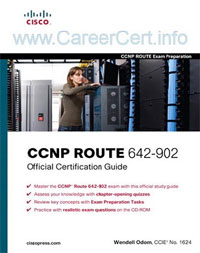
642-902 ROUTE
Implementing Cisco IP Routing
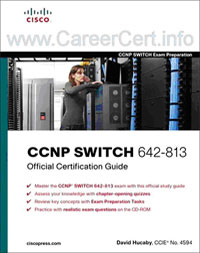
642-813 SWITCH
Implementing Cisco IP Switched Networks
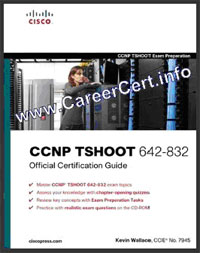
642-832 TSHOOT
Troubleshooting and Maintaining Cisco IP Networks
Building Scalable Cisco Internetworks Exam (BSCI)(642-901)
The Building Scalable Cisco Internetworks (BSCI 642-901) is a qualifying exam for the Cisco Certified Network Professional CCNP, Cisco Certified Design Professional CCDP, and Cisco Certified Internetwork Professional CCIP certifications. The BSCI 642-901 exam will certify that the successful candidate has important knowledge and skills necessary to use advanced IP addressing and routing in implementing scalability for Cisco ISR routers connected to LANs and WANs. The exam covers topics on Advanced IP Addressing, Routing Principles, Multicast Routing, IPv6, Manipulating Routing Updates, Configuring basic BGP, Configuring EIGRP, OSPF, and IS-IS.
Exam Topics
The following information provides general guidelines for the content likely to be included on the exam. However, other related topics may also appear on any specific delivery of the exam. In order to better reflect the contents of the exam and for clarity purposes the guidelines below may change at any time without notice.
Implement VLANs.
~
~
~
~
~
Explain the functions of VLANs in a hierarchical network.
Configure VLANs (e.g., Native, Default, Static and Access).
Explain and configure VLAN trunking (i.e., IEEE 802.1Q and ISL).
Explain and configure VTP.
Verify or troubleshoot VLAN configurations.
Conduct the operation of Spanning Tree protocols in a hierarchical network.
~
~
~
~
~
~
~
~
Explain the functions and operations of the Spanning Tree protocols (i.e., RSTP, PVRST, MISTP).
Configure RSTP (PVRST) and MISTP.
Describe and configure STP security mechanisms (i.e., BPDU Guard, BPDU Filtering, Root Guard).
Configure and Verify UDLD and Loop Guard.
Verify or troubleshoot Spanning Tree protocol operations.
Configure and verify link aggregation using PAgP or LACP.
Implement Inter-VLAN routing.
~
~
~
Explain and configure Inter-VLAN routing (i.e., SVI and routed ports).
Explain and enable CEF operation.
Verify or troubleshoot InterVLAN routing configurations.
Implement gateway redundancy technologies.
~
~
~
Explain the functions and operations of gateway redundancy protocols (i.e., HSRP, VRRP, and GLBP).
Configure HSRP, VRRP, and GLBP.
Verify High Availability configurations.
Describe and configure wireless client access.
~
~
~
Describe the components and operations of WLAN topologies (i.e., AP and Bridge).
Describe the features of Client Devices, Network Unification, and Mobility Platforms (i.e., CCX, LWAPP).
Configure a wireless client (i.e., ADU).
Describe and configure security features in a switched network.
~
~
~
Describe common Layer 2 network attacks (e.g., MAC Flooding, Rogue Devices, VLAN Hopping, DHCP Spoofing, etc.)
Explain and configure Port Security,802.1x, VACLs, Private VLANs, DHCP Snooping, and DAI.
Verify Catalyst switch (IOS-based) security configurations (i.e., Port Security, 802.1x, VACLs, Private VLANs, DHCP Snooping, and DAI).
Configure support for voice.
~
~
~
Describe the characteristics of voice in the campus network.
Describe the functions of Voice VLANs and trust boundaries.
Configure and verify basic IP Phone support (i.e. Voice VLAN, Trust and CoS options, AutoQoS for voice)
Implementing Secure Converged Wide Area Networks (ISCW) (642-825)
In the Building Cisco Remote Access Networks course, students learn how to build, configure and troubleshoot a remote access network to interconnect central sites to branch offices and home offices. Students also learn how to control access to the central site, as well as to maximize bandwidth utilization over the remote links.
Exam Topics
The following information provides general guidelines for the content likely to be included on the exam. However, other related topics may also appear on any specific delivery of the exam. In order to better reflect the contents of the exam and for clarity purposes the guidelines below may change at any time without notice.
Describe the components and operation of Frame-Mode MPLS (e.g., packet-based MPLS VPNs).
Configure and verify Frame-Mode MPLS.
Implement a site-to-site IPSec VPN
~
~
~
~
~
Describe the components and operations of IPSec VPNs and GRE Tunnels.
Configure a site-to-site IPSec VPN/GRE Tunnel with SDM (i.e., preshared key).
Verify IPSec/GRE Tunnel configurations (i.e., IOS CLI configurations).
Describe, configure, and verify VPN backup interfaces.
Describe and configure Cisco Easy VPN solutions using SDM.
Describe network security strategies.
~
~
~
Describe and mitigate common network attacks (i.e., Reconnaissance, Access, and Denial of Service).
Describe and mitigate Worm, Virus, and Trojan Horse attacks.
Describe and mitigate application-layer attacks (e.g., management protocols)
Implement Cisco Device Hardening
~
~
~
~
Describe, Configure, and verify AutoSecure/One-Step Lockdown implementations (i.e., CLI and SDM).
Describe, configure, and verify AAA for Cisco Routers.
Describe and configure threat and attack mitigation using ACLs.
Describe and configure IOS secure management features (e.g., SSH, SNMP, SYSLOG, NTP, Role-Based CLI, etc.)
Implement Cisco IOS firewall.
~
~
~
Describe the functions and operations of Cisco IOS Firewall (e.g., Stateful Firewall, CBAC, etc.).
Configure Cisco IOS Firewall with SDM.
Verify Cisco IOS Firewall configurations (i.e., IOS CLI configurations, SDM Monitor).
Describe and configure Cisco IOS IPS.
~
~
Describe the functions and operations of IDS and IPS systems (e.g., IDS/IPS signatures, IPS Alarms, etc.)
Configure Cisco IOS IPS using SD
The Optimizing Converged Cisco Networks (642-845 ONT) is a qualifying exam for the Cisco Certified Network Professional CCNP. The ONT 642-845 exam will certify that the successful candidate has important knowledge and skills in optimizing and providing effective QOS techniques for converged networks. The exam topics include implementing a VOIP network, implementing QoS on converged networks, specific IP QoS mechanisms for implementing the DiffServ QoS model, AutoQoS, wireless security and basic wireless management.
Exam Topics
The following information provides general guidelines for the content likely to be included on the exam. However, other related topics may also appear on any specific delivery of the exam. In order to better reflect the contents of the exam and for clarity purposes the guidelines below may change at any time without notice.
Describe Cisco VoIP implementations.
~
~
Describe the functions and operations of a VoIP network (e.g., packetization, bandwidth considerations, CAC, etc.).
Describe and identify basic voice components in an enterprise network (e.g. Gatekeepers, Gateways, etc.)
Describe QoS considerations.
~
~
Explain the necessity of QoS in converged networks (e.g., bandwidth, delay, loss, etc.).
Describe strategies for QoS implementations (e.g. QoS Policy, QoS Models, etc.).
Describe DiffServ QoS implementations.
~
~
~
~
~
~
~
Describe classification and marking (e.g., CoS, ToS, IP Precedence, DSCP, etc.).
Describe and configure NBAR for classification.
Explain congestion management and avoidance mechanisms (e.g., FIFO, PQ, WRR, WRED, etc.).
Describe traffic policing and traffic shaping (i.e., traffic conditioners).
Describe Control Plane Policing.
Describe WAN link efficiency mechanisms (e.g., Payload/Header Compression, MLP with interleaving, etc.).
Describe and configure QoS Pre-Classify.
Implement AutoQoS.
~
~
~
Explain the functions and operations of AutoQoS.
Describe the SDM QoS Wizard.
Configure, verify, and torubleshoot AutoQoS implementations (i.e., MQC).
Implement WLAN security and management.
~
~
~
Describe and Configure wireless security on Cisco Clients and APs (e.g., SSID, WEP, LEAP, etc.).
Describe basic wireless management (e.g., WLSE and WCS). Configure and verify basic WCS configuration (i.e., login, add/review controller/AP status, security, and import/review maps).
Describe and configure WLAN QoS.
CCIE
Exams are the core of the CCIE program.Training is not the CCIE program objective. Rather, the focus is on identifying those experts capable of understanding and navigating the subtleties, intricacies and potential pitfalls inherent to end-to-end networking. To become certified as a CCIE you must pass BOTH a written qualification exam AND the corresponding hands-on lab exam in one of the CCIE tracks.
Written Exams are two-hour, multiple choice, computer-based exams available at authorized testing centers worldwide.
Lab exams are eight-hour, hands on exams that test the ability to configure and troubleshoot equipment and are offered at selected Cisco locations.
Check Scheduling links below for more information.
Routing and Switching
Our most popular track identifies experts in WAN, LAN and dial access networking.
Course Contents
Bridging and Switching
Configuring a Primary Root Switch Configuring InterVLAN Routing Configuring VLANs Configuring Access Control Configuring SPAN and RSPAN Configuring ISL Trunking DLSw+ Ethernet Redundancy Feature Configuring EtherChannel Unidirectional Link Detection Protocol Feature IEEE 802.1 LAN/MAN Bridging & Management Configuring Fast EtherChannel and Gigabit EtherChannel Configuring Transparent Bridging Transparent Bridging Commands
Cisco Device Operations
TCP and UDP Small Servers PCMCIA Filesystem Compatibility Matrix and Filesystem Information Routers Troubleshooting Cisco Catalyst Switches
IP
Cisco IOS Network Address Translation (NAT) Deploying Network Address Translation Proxy ARP Ping and Traceroute Commands FTP Active or Passive GRE Tunnel Access Control Lists and IP Fragments
IP Routing
Enhanced IGRP Stub Routing
Multicast
Multicast Quick-Start Configuration Guide
LAN
1000BASE-T GBIC Installation Notes Preparing for Installation Troubleshooting Cisco Catalyst Switches Troubleshooting Connectivity in a Wireless LAN Network Configuring FDDI/CDDI Switching Access Point Fibre Channel and Ethernet/IP Unite Tagging Scheme IEEE 802.2 Logic Link Control IEEE 802.3 CSMA/CD Access Method IEEE 802.5 Token-Ring Access Method IEEE 802.11 Wireless Troubleshooting Cisco Router Token Ring Interfaces Token Ring/IEEE 802.5 Troubleshooting Ethernet Fast Ethernet 100-Mbps Solutions
Multiservice
Cisco IOS Voice, Video, and Fax Commands
QoS
Quality of Service Solutions Configuration Guide Introduction to Frame Relay Network-Based Application Recognition Quality of Service Commands Configuring RSVP
WAN
Capabilities of Typical ISDN Switches Configuring ISDN BRI for Leased-Line Service MS-CHAP Support T1 Layer 1 Troubleshooting Asynchronous Transfer Mode Switching ATM Routing with IISP and PNNI PPPoA Baseline Architecture Voice over ATM with AAL2 Trunking Interface Commands Configuring Serial Interfaces Introduction to WAN Technologies Configuring Frame Relay
Security Identifies experts in configuring and maintaining secure networks.
Course Contents
Cisco Documentation Cisco - Internet Security Advisories Increasing Security on IP Networks Security Technologies Improving Security on Cisco Routers Cisco Service & Support Technical Tips Frame Relay Routing Protocols Configuring IP Routing Protocols OSPF Design Guide BGP Tech Tips EIGRP IGRP Router Management
Service Provider
(formerly Communications and Services)
Certifies expert level knowledge of networking in service provider environments.
Certifies expert level knowledge of voice over IP networks in the enterprise.
Course Contents
QoS Introduction H.323 Introduction MGCP Introduction SIP Introduction IP Telephony/VOIP Introduction Designing a Static Dial Plan Cisco CallManager Clustering Understanding and Troubleshooting Echo Problems Cisco SIP Proxy Server Introduction Voicemail Integration Cisco CallManager Introduction
CCIE Study Material
Course Fees does not include Examination Charges
The CISCO Certified Network Professional exam (CCNP) will have four papers.
Students can Complete CCNA+CCNP in 30 to 35 days. This duration includes
Completion of Course at Compufield premises, instruction, Practice,
Practicals and Offline examination test.
Bandra (W): 1st Floor. O'Priya Building, Peter Dias Road, Near Mehboob Studio , Bandra (West) Mumbai - 400 050, India +91 - 26551794 / +91 9322755916
Andheri (W): Office No R- 26, 1st Floor, RNA Complex Lokhandwala, 3rd Cross Lane, Next to High Point Restaurant, Andheri (West) Mumbai - 400 053, India : +91 9820494017

















 +91-22-23676218 / 23671772